
Some persons have either a genetic (inherited) or acquired predisposition to develop blood clots, known as a thrombophilia or clotting disorder. There are several types of thrombophilias which contribute to varying degrees of clot risk.

For most patients, knowing they have a clotting disorder does not change treatment. Because having a clotting disorder often does not impact treatment decisions, thrombophilia testing is not always done. In patients who had an unprovoked blood clot (situations when no risk factor which caused the clot can be clearly identified), thrombophilia testing may be determined helpful to guide decisions on the length of treatment with blood-thinning medication. However, no consensus exists amongst health care professionals on which patients should be tested for a clotting disorder.
Routine testing of family members of persons with a diagnosed thrombophilia is not recommended. In the case where a patient has a strong thrombophilia (a clotting disorder which carries a high-risk for developing clots such as homozygous factor V Leiden, homozygous prothrombin 20210 mutation, double heterozygous factor V Leiden plus prothrombin 20210 mutation, deficiency of protein C, S or antithrombin), family testing may be appropriate to guide family member’s medical decisions (for example, in case of surgery, birth control choices or pregnancy).
Decisions on whether testing to look for a thrombophilia is appropriate (for both the patient and family members) requires an individualized approach which should be discussed with your health care provider.
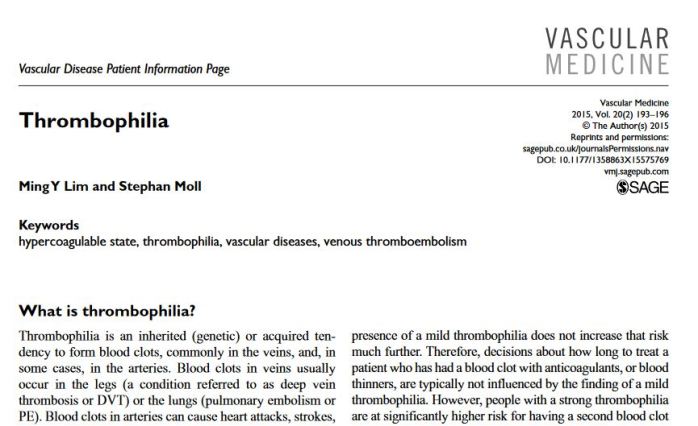
Additional information about thrombophilia can be found in this handout for patients published in the journal Vascular Medicine.
 Clot Connect